
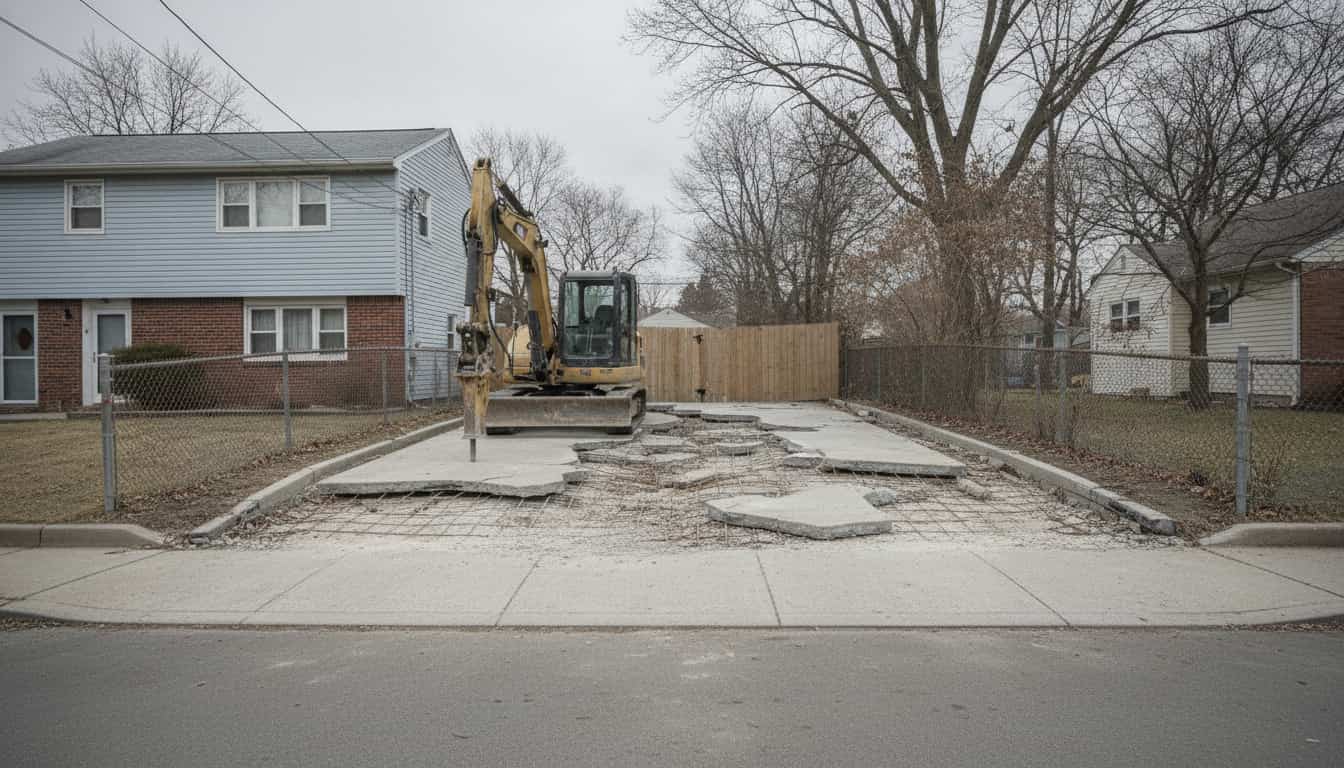
Concrete Removal on Staten Island
Driveways, garage slabs, footings, front steps, rear patios and the walkways between them. Concrete does not get lifted out in one piece.
Driveways, slabs and the things poured against them
Five jobs that come out the same way and sit in very different places.
A concrete job on this island is usually one of five things. The driveway. The slab a garage stands on, or the slab left after one comes off. The footings under a structure that has already gone. The front steps and the stoop poured against the house. A rear patio, and the walkway that runs to it.
They come out the same way and they are priced on the same two questions, but they sit in very different places on a lot, and where a thing sits is most of the job.
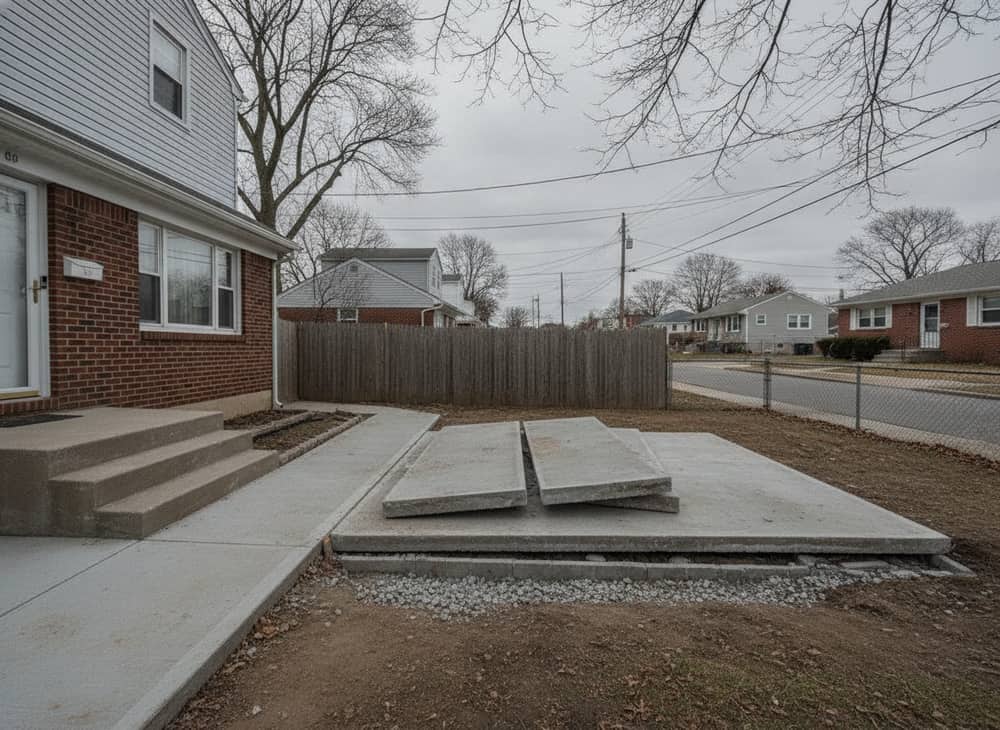
Broken, then carried
Concrete does not get lifted out whole. It gets broken to a size that can be carried, and then it gets carried. That is why the route across the property matters as much as the slab does.
The two questions are the same every time. How the breaker reaches the concrete, and how the material gets from there to a truck. The two answers change from one lot to the next: a slab at the back of a lot served by a single driveway is a different day’s work from the same slab beside an open kerb.
Tell us where the concrete is.
The slab, where it sits on the property, and how a truck would reach it.
Why concrete is weighed and not measured
Every other material on a demolition is priced by volume. This one is not, and it changes what matters.
It is heavy before it is big
A slab that looks modest fills a truck by weight long before it fills it by volume. The load count is set by what the truck can legally carry, not by how much room the pieces take up.
Thickness is invisible
Two driveways with identical surface area can differ by half again in weight because one was poured thicker or has an older slab under it. That is found by breaking the edge, not by looking.
Reinforcement changes the day
Mesh or rebar through a slab means it comes up in tied sheets rather than in pieces, and it has to be cut free before any of it moves. Worth knowing before the day rather than during it.
What is underneath, and what the ground is like after
And what state it is left in depends on what is going back.
Under a driveway there is usually a compacted stone base, and under an old slab there is sometimes another slab. Under footings there is whatever the original builder was standing on.
We break out, load and haul off, then rake the base back level and pick the small material out of it. That includes the broken edges and anything metal that came away with the slab, because that is the ground somebody walks on next and, often, the ground something new gets poured onto.
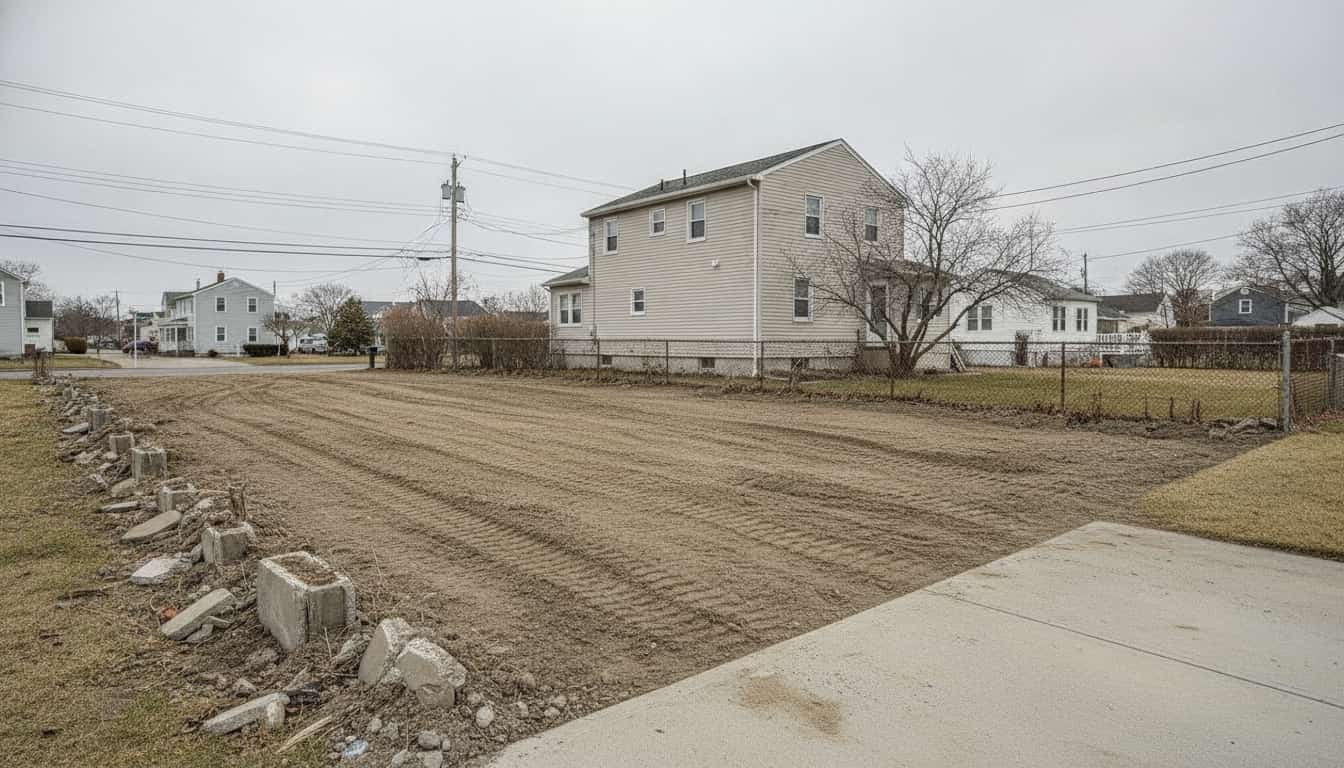
Concrete out, ground level, material gone
The breakout and the carting are the same job. Nothing is left stacked at the side of the property for somebody else to price.
Questions we get asked
Do you take out driveways?
Yes, and it is the most common concrete job here. A full driveway, a section of one, or the apron in front of a garage.
The whole slab and the base it sits on come out unless you tell us you want the base left in for a new pour.
What is left when the slab is gone?
The compacted stone base, raked level and picked clean of broken material.
If you are pouring something new in the same place, tell us on the visit and we will leave it in the state the new work needs rather than in the state a cleared lot needs. They are not the same thing.
Will the lawn survive?
That depends on the route, and the route is something we look at before we quote rather than something we discover on the day.
Where the only way from the concrete to the truck crosses grass, we board it, work in loads the surface will carry, and leave what we crossed the way we found it.
Can you do the concrete as part of a bigger job?
Yes, and that is usually how it comes up. A slab or a set of footings is what is left once the structure above them has gone.
It is quoted with the rest of the work rather than as a second job, because it is the same crew, the same trucks and the same route out.
Tell us where the concrete is
The slab, where it sits on the property, and how a truck would reach it. We come and look before quoting.