
Interior Demolition on Staten Island
A strip-out is a controlled subtraction. The job is knowing what holds the house up and what does not, then removing only the second thing.
Back to the frame
Kitchens, bathrooms, partitions, flooring, ceilings and the fixings behind them.
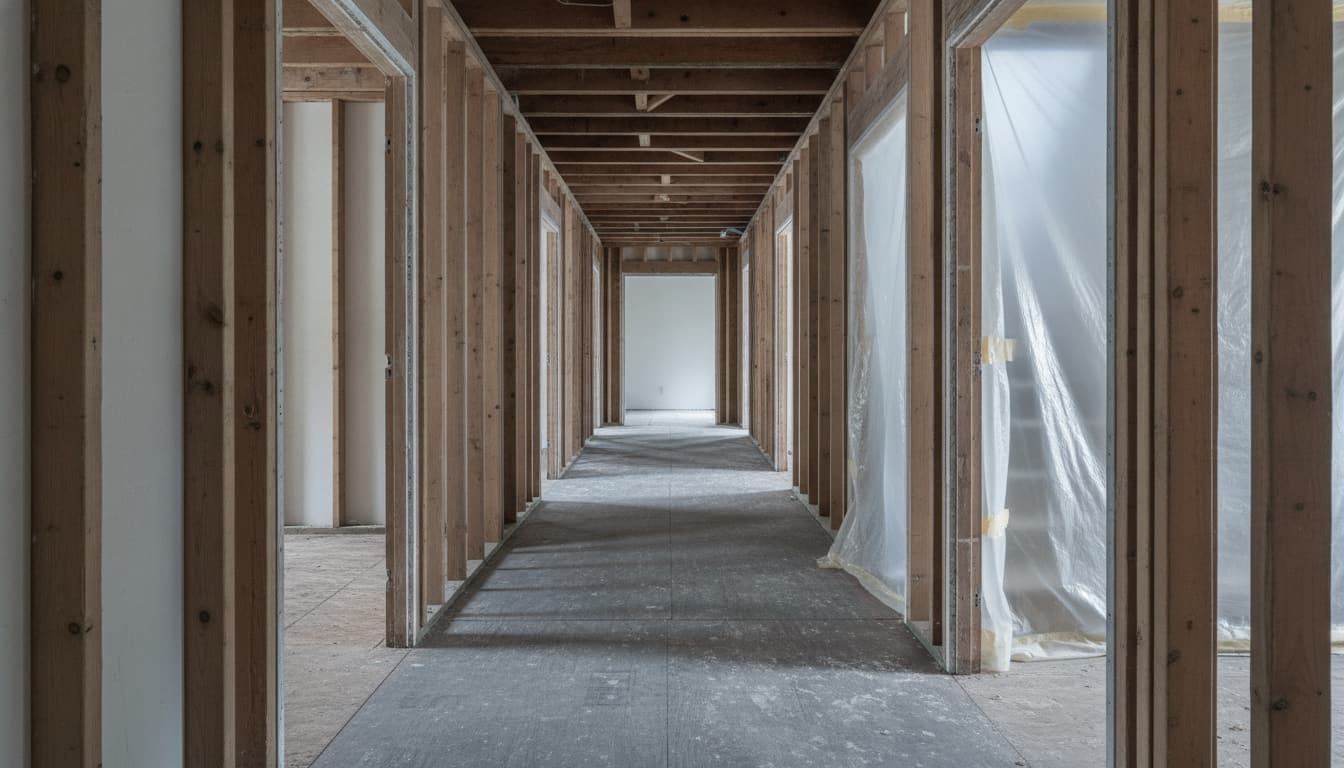
Everything that is not holding the house up comes out. Cabinetry, fixtures, tiling, flooring and subfloor, non-structural partitions, ceilings, and the finishes behind all of it.
What stays is the frame, the load paths, and anything feeding the rest of the house. This work is the demolition half of a gut renovation, and it is handed over swept and clear with the structure exposed and ready for framing, electrical or plumbing to begin.
What we work around
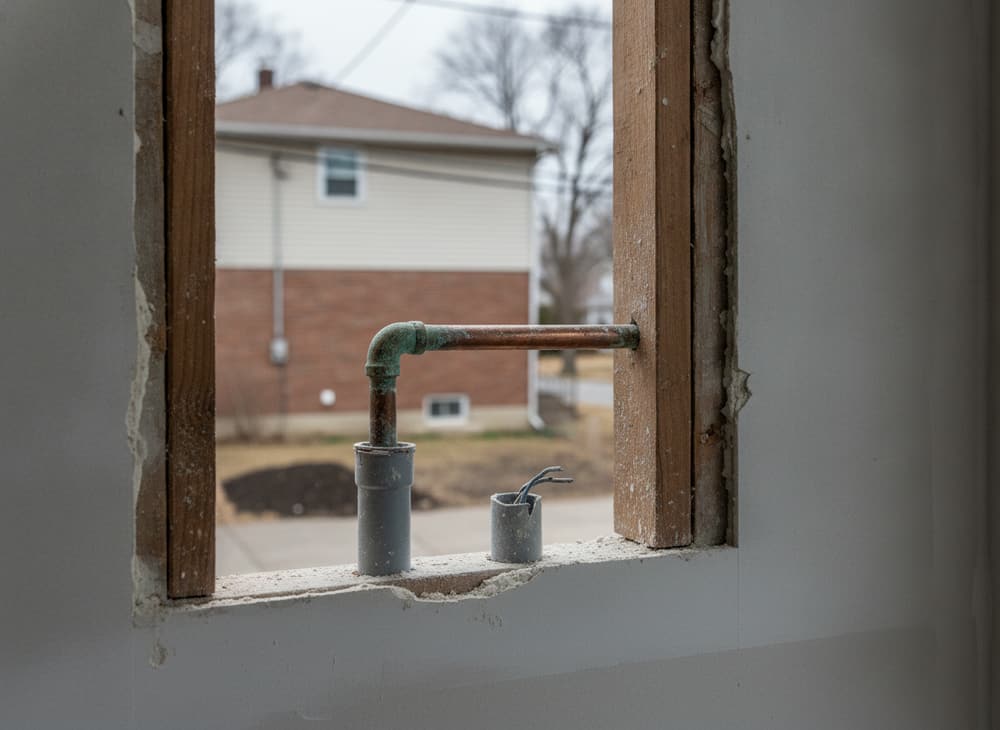
Live services are what turns a straightforward strip-out into a bad week. Water, gas and electrical runs are identified before the first wall opens, not after.
In a house that is staying occupied, that identification is also what decides which rooms keep working while the job runs.
Walk us through the rooms.
What is coming out, what has to stay, and whether anyone is still living in it.
Working in a house you still live in
Dust containment, the door the material leaves by, and what gets protected on the way.
On detached and semi-attached property the work is often happening while the family is still there, or planning to come back to it.
Dust containment, which door the material leaves by, and what gets protected on the way out are part of the job rather than an afterthought. For one room or one floor, most people stay. For a gut that takes the whole interior back to the frame, the water and the power are off long enough that most families move out for that stretch. Which of the two your job is gets settled before it starts, not on the day.
How it all gets out of a house
The door, the driveway, and no shared hallway to negotiate.
This is the part of an interior job that is genuinely different here, and it is the reason a strip-out on this island is not the same work as the same strip-out in an apartment building.
A house on its own lot has a door the material can go straight out of and a driveway a container can stand on. Nothing has to be booked, nothing waits on a freight elevator, and there is no shared hallway or lobby belonging to somebody else to protect on the way. The route is short and it belongs to the person paying for the job.
What that buys is continuity. The material leaves as the work goes rather than accumulating in the room it came out of, so the crew is never working around its own debris and the finish date does not depend on somebody else’s building schedule. What it costs is that the route runs across the customer’s own ground, so the driveway, the lawn and the threshold are protected, and the container is placed where it will not trap a car in for a week.
One room, or the whole inside
Both are jobs. The size matters less than what is behind the finishes.
One room
A kitchen, a bathroom, a single floor. The work is confined, the rest of the house keeps running, and the material goes out in a handful of loads.
One level
Every non-structural wall on a level while the frame and the roof stay exactly where they are. This is where knowing which wall is structural stops being academic.
The whole interior
Back to the frame throughout. Services off, the house empty, and the schedule set by what the next trade needs rather than by us.
How a strip-out runs
Four stages, and the third one is deliberately the slowest to start.
-
Walk the space
What is coming out, what is staying, and what is live behind it. Room by room, with you.
-
Isolate
Live services identified and worked around, protection to the areas that stay, and the dust route closed off from the rest of the house.
-
Strip
Worked back in sequence rather than opened up all at once, so what is behind a wall is known before the wall is fully off.
-
Clear
Loaded and hauled off as the work goes rather than stacked in the driveway, floor swept and ready for the next trade.
What an interior job is measured in
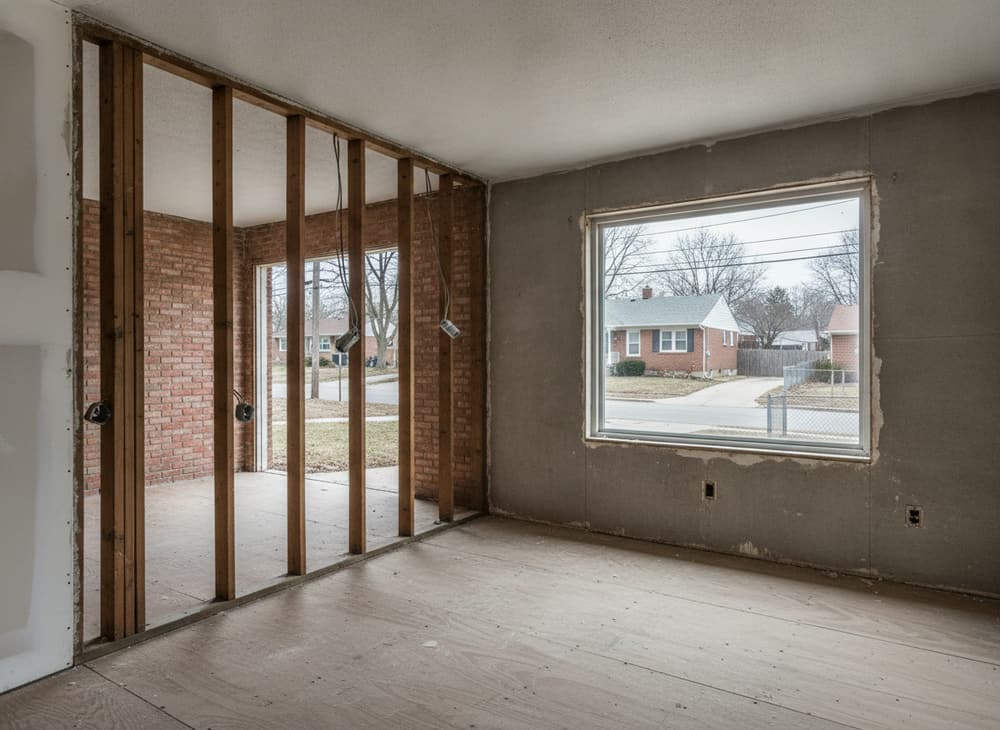
Not rooms. Loads. A single kitchen can fill more of a truck than a whole floor of partition walls, and that is what sets both the days and the figure.
Questions we get asked
Can we stay in the house during a strip-out?
For one room or one floor, usually yes. We close the work area off from the rest of the house and keep the dust inside it, so the rooms you are still using stay livable.
For a gut renovation that takes the whole interior back to the frame, the water and the power are off for long enough that most families move out for that stretch. Which of the two your job is gets settled before it starts, not on the day.
Can you take out just part of the inside?
Yes, and it is most of what this page describes. One kitchen, one bathroom, one floor, or every non-structural wall on a level while the frame and the roof stay exactly where they are.
The work is knowing what is holding the house up before anything opens, and that is the first thing we look at.
Does the material leave as the work goes?
Yes. The material leaves as the work goes rather than stacking up in the driveway, which matters most in a house someone is still living in.
Removal is included unless you have already arranged it yourself.
What about the wiring and the pipes?
They get found before anything opens. Water, gas and electrical runs are traced on the walk-through and worked around, and anything feeding a part of the house that is staying in use is left live and protected.
Where a run has to come out, that is agreed with you first rather than discovered afterwards.
Where does the material go while you are working?
Into a container on the driveway, and out from there. On a house the route is the door to the driveway, so nothing has to be carried through a shared space and nothing has to be booked with a building.
We place the container where it will not trap a car in, and we protect the ground and the threshold along the route. If the driveway cannot take one, we say so on the visit and we work in loads instead.
Tell us what is coming out
Walk us through the rooms and what has to stay, and we will come and look before quoting.